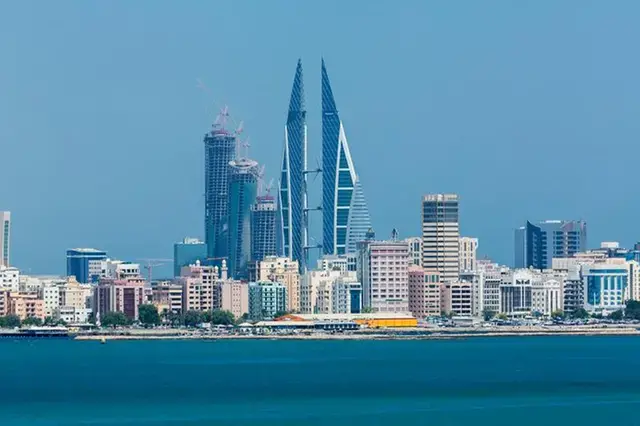
Bahrain’s economy is on track for significant transformation
Bahrain’s economy is poised for a significant transformation following the inaugural Bab Al Bahrain Forum organised by the Bahrain Chamber, with comprehensive recommendations emerging to forge a sustainable future for trade and employment amidst global economic shifts.
Held last month under the patronage of His Royal Highness Prince Salman bin Hamad Al Khalifa, Crown Prince and Prime Minister, the high-profile event convened international leaders, policymakers, and economic experts at the Four Seasons Hotel Bahrain Bay to address pressing global challenges and chart a path for economic growth and resilience.
Bahrain Chamber chairman Sameer Nass revealed at a Press conference yesterday that the forum generated more than 200 recommendations, including 36 key strategic proposals. These initiatives are meticulously crafted to bolster Bahrain’s and the broader Gulf region’s economic landscape across critical sectors.
Besides the chairman, the Press conference was attended by first vice-chairman Khalid Najibi, second vice-chairman Mohamed Alkoheji as well as members of the executive committee, the board, and key management officials.
“Key high-impact recommendations spanned sectors including food, health, industry and energy, transport and logistics, finance, insurance and taxes, education and training, hospitality and tourism, commercial markets, technology, and real estate and construction,” said Mr Nass.
In the food sector, proposals included launching national investment initiatives, establishing strategic food warehouses, facilitating food product exports, and developing public-private partnerships for modern central markets to enhance national food security and market access. “Ensuring our food security through strategic partnerships and robust infrastructure is paramount for Bahrain’s long-term stability,” he added.
For health, recommendations focussed on forming a higher national committee for sustainable health policies and launching an international health accreditation initiative with financial and technical support to bolster the sector’s quality and competitiveness.
The industry and energy sector highlighted activating renewable energy adoption through new laws, improving efficiency in large-scale industries, and establishing an independent sustainable energy authority. “The transition to green energy is not just an environmental imperative but a significant economic opportunity for Bahrain,” said Mr Nass.
In transport and logistics, calls were made for strategic incentive packages for infrastructure investment, redesigning regulatory frameworks, and establishing unified systems to streamline clearance procedures and enhance competitive services.
As for finance, insurance and taxes, the recommendations address concerns over tax policy, advocating for maintaining Bahrain’s competitiveness with lower taxes, ensuring clarity on tax frameworks, implementing e-invoicing, and promoting innovation in banking products, particularly for small and medium-sized enterprises (SMEs).
The education and training sector is seeking to implement educational tourism and has urged greater autonomy to institutions in curriculum development, alongside facilitating admission and visa procedures for international students.
For hospitality and tourism, recommendations included launching a national qualification programme, prioritising Bahraini hiring managers, and integrating tourism into school curricula.
To address challenges facing commercial markets, the chamber has focused on policy reviews for startups, proposing updated laws, flexible rental payment packages, and postponing VAT collection on imported goods until after the sale process.
“As for the technology sector, our aim at the chamber, is to address funding difficulties for startups by establishing a dedicated investment fund and organising awareness sessions for financing proposals. Supporting our tech startups with dedicated funding and guidance is crucial for driving innovation and diversifying our economy,” Mr Nass added.
In real estate and construction, proposals included establishing a public company for basic material supply and facilitating property purchase and financing for foreign investors.
Beyond sectoral specifics, the forum outlined broader strategic themes, emphasising ‘Global Transformations and Economic Resilience’ through diversification and infrastructure development, and Gulf economic integration via unified policies in trade and food security. The forum underscored the imperative of Digital and Green Transformation, promoting AI adoption and circular economies.
“Our strategies for global trade and supply chains included localising high-value flows and leveraging predictive analytics and blockchain. The forum also stressed private sector empowerment, advocating for collaborative ecosystems to stimulate innovation,” he added.
Discussions on Emerging Market Strategies drew lessons from successful economies, while Innovation and Intellectual Property Policies focused on enhancing IP laws and R&D incentives. A strong commitment to Sustainable Growth and ESG Standards was evident, alongside addressing Future Challenges and Climate Adaptation through restructured economic programs and regional investment blocs.
“Our collective commitment to sustainability and ESG standards will be the bedrock of long-term economic stability and growth,” said Mr Nass.
The forum saw significant participation from international institutions, including the International Labour Organisation (ILO), the World Trade Organisation (WTO), and the International Chamber of Commerce (ICC), alongside the GCC General Secretariat, underscoring a collective commitment to fostering a stable, sustainable, and inclusive economic future for Bahrain and the wider region.